
 Try AI Planner
Most travel businesses did not choose to run five different booking systems. It happened gradually. The B2C website came first, built on one platform. Then a B2B portal was bolted on for agents, often from a different vendor because it was cheaper or faster to launch. A mobile app followed, sometimes a thin wrapper around the website, sometimes its own codebase entirely. Eventually a Super App or marketplace integration arrived, needing yet another connector. Each addition solved an immediate problem, but together they created a quiet, compounding cost that shows up every day in mismatched prices, stale inventory, and reports that never quite agree with each other.
The symptoms are familiar to anyone who has run commercial or product for a travel company. A promotion goes live on the website but does not reach agents until someone remembers to update the B2B portal manually. A room or seat sells out on mobile but is still bookable on the desktop site for another twenty minutes. Finance closes the month and has to reconcile three separate ledgers before anyone can trust the revenue number. None of these are isolated incidents. They are structural, and they get worse as the business adds channels rather than better.
This article makes the case for the opposite approach, running one booking engine underneath every sales channel, whether that channel is a public website, a B2B agent portal, a native mobile app, or a listing inside a Super App. We look at what breaks when inventory, pricing, business rules and reporting are duplicated across systems, what a single engine changes operationally, and how Vbooking Turbo is built specifically to be that shared layer without forcing every channel to look identical to the customer.
The hidden cost of separate stacks
When each channel has its own booking logic, every change to price, availability or policy has to be made in multiple places or pushed through multiple integrations that were never designed to stay in sync in real time. The team responsible for the change has to remember every downstream system, and the systems themselves rarely fail loudly when they drift apart. A rate that should have expired keeps quietly selling on one channel while it is correctly withdrawn on another. Nobody notices until a customer complains or finance flags a discrepancy weeks later.
This is not primarily a technology problem, it is a governance problem created by technology. Separate stacks mean separate teams, separate release schedules, and separate points of failure. A rule that finance and revenue management agreed on in a meeting has to be implemented correctly in the web CMS, the B2B portal admin, the mobile backend, and any third-party marketplace feed. The probability that all four implementations match exactly, and stay matched as the rule changes again next month, falls fast as the number of systems grows.
Where the drift shows up first
Inventory is usually the first place teams notice a problem, because overselling and phantom availability are visible to customers immediately. Pricing drift is next, often invisible to the business until an agent or customer points out that the same product costs different amounts on two channels at the same moment. Rules drift last but is the most damaging over time, because cancellation policies, minimum stay requirements, and eligibility conditions that disagree across channels erode trust with both travelers and distribution partners.
- Overselling or blocked inventory caused by stock counts that update on different schedules across systems
- Price mismatches between web, app and agent channels for the exact same product and date
- Cancellation and refund rules that are configured slightly differently in each admin panel
- Promotions that launch on one channel before agents or the app catch up, creating confusion and support tickets
- Reporting that requires manual reconciliation because each channel logs bookings in its own format
What a single engine actually changes
A single booking engine does not mean a single interface. B2C travelers, B2B agents, mobile users and Super App audiences have genuinely different needs, and a good architecture respects that by keeping the presentation layer separate from the commerce layer. What changes is that all of those interfaces call the same inventory, the same pricing engine, and the same rules engine underneath. A price change made once takes effect everywhere at the same instant, because there is only one place where price is calculated, not four places that each need to be told about it.
This has a direct effect on how fast a commercial team can move. Launching a flash sale, adjusting a minimum length of stay, or withdrawing a supplier during a disruption becomes a single action instead of a checklist across systems, some of which are owned by different teams or vendors with their own release cycles. The commercial team gets to act at the speed of the market rather than the speed of the slowest integration in the stack.
Inventory as one source of truth
With one engine, available stock, whether that is hotel rooms, flight seats, activity slots or package units, is held in a single record that every channel reads from and writes to in real time. A booking made through the mobile app decrements the same counter that the B2B portal checks before confirming an agent sale. There is no batch job reconciling counts between systems overnight, because there is nothing to reconcile. This alone removes one of the most common and most damaging failure modes in multi-channel travel commerce, which is selling the same unit twice.
Pricing and rules applied once, everywhere
Pricing in travel is rarely a flat number. It depends on channel, customer segment, length of stay, currency, promotions, and contracted rates for specific agent tiers. When pricing logic lives in one engine, these variables are expressed as configurable rules evaluated centrally, and every channel receives the correct output for its context automatically. An agent logged into the B2B portal sees their negotiated net rate, a retail customer on the website sees the public rate with any active promotion applied, and both numbers come from the same calculation, not from two teams maintaining two spreadsheets of logic that are supposed to match.
B2B agents need parity, not a downgraded experience
B2B channels are often treated as an afterthought, built later and maintained less carefully than the consumer website. This shows up as agents working with slower interfaces, incomplete inventory, or rates that lag behind what is available directly to consumers. Agents notice, and they respond by booking less through the portal and more through phone calls or email, which pushes cost and friction back onto the supplier's own operations team instead of removing it.

When B2B runs on the same engine as B2C, agents get the same real-time inventory and the same pricing logic, with commercial terms such as commission, net rates and credit limits layered on top through the rules engine rather than a separate, weaker system. This is not about giving agents a consumer-branded website. It is about giving them a professional interface built for volume and speed, backed by data that is exactly as current as what a retail customer sees at that same moment.
- Agents book against the same live inventory as direct customers, eliminating double-booking risk
- Net rates and commission rules are calculated automatically per agent tier from the same pricing engine
- Credit terms, booking limits and payment methods are configured centrally and enforced consistently
- New products and promotions reach agents at the same time they reach consumers, not days later
Mobile and Super App channels without a second codebase
Mobile apps and Super App integrations tend to be where duplication is worst, because they are frequently built as separate projects with their own backend logic to hit tight launch deadlines. The result is a mobile experience that quietly falls behind the web experience in features, pricing accuracy or rule coverage, because every change has to be reimplemented rather than reused. Over time the mobile app becomes a maintenance burden that discourages further investment, which is the opposite of what a growing mobile and app-based booking share requires.
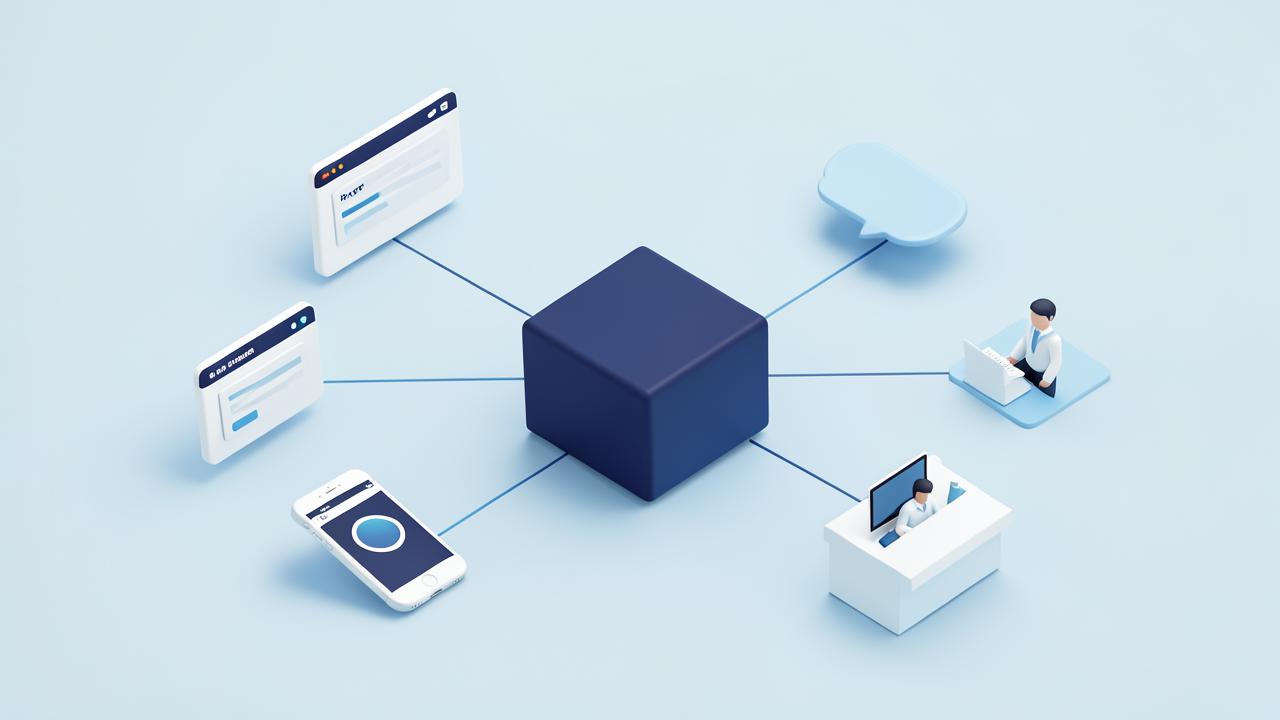
A shared engine exposed through APIs lets mobile and Super App surfaces consume the same inventory, pricing and rules as every other channel, while still having their own tailored interface, checkout flow and design language. The Super App listing might show a simplified card with a single tap-to-book flow, while the native app shows a fuller itinerary builder, but both are asking the same engine the same questions and getting consistent answers.
Example
Rolling out a flash sale across four channels at once
- 1Revenue manager creates a promotion rule in Turbo, defining discount, eligible dates, inventory and channel scope
- 2The rule is validated against existing pricing and inventory constraints before it goes live
- 3Turbo publishes the rule to its shared pricing and rules engine with an immediate or scheduled activation time
- 4Web, mobile app, B2B portal and Super App integration all query the same engine and reflect the new price instantly
- 5Bookings from every channel decrement the same inventory pool, so the promotion cannot oversell
- 6A single dashboard shows performance across all four channels without manual consolidation
Reporting that adds up without a spreadsheet
Multi-channel reporting is often the clearest symptom of a fragmented stack. Each channel exports its own bookings in its own format, on its own schedule, and someone on the finance or analytics team spends real time each week or month lining them up into one view before leadership can ask a simple question like total revenue by product line. This delay means decisions get made on incomplete or outdated information, and it means the same reconciliation work has to be repeated indefinitely as long as the stack stays fragmented.
When every channel books through one engine, every transaction lands in one data model from the moment it is created, tagged with its channel, product, price and applied rules. Reporting becomes a query against a single source rather than a reconciliation project. This does not just save time, it changes what questions the business can practically ask, because comparing channel performance, testing pricing changes, or spotting a rules misconfiguration no longer requires assembling data from scratch each time.
| Capability | Separate stacks | One booking engine |
|---|---|---|
| Inventory updates | Synced on a delay or via batch jobs between systems | Single real-time record read by every channel |
| Pricing changes | Re-entered manually in each admin panel | Configured once, applied everywhere instantly |
| Business rules | Implemented separately per platform, prone to drift | Centralized rules engine enforced consistently |
| Reporting | Manual reconciliation across exports | Unified data model queried directly |
| New channel launch | New integration project with its own logic | New interface connected to existing engine |
How Turbo is built to be the shared layer
Vbooking Turbo is designed around the principle that presentation and commerce logic should be separate concerns. Turbo holds inventory, pricing, promotions, business rules and transaction records in one engine, and exposes that engine through APIs and pre-built interfaces for web, mobile, B2B and marketplace channels. A travel business can launch its consumer website and B2B portal on Turbo directly, then plug a native mobile app or a Super App listing into the same engine through the API without duplicating a single pricing rule or inventory record.

This matters most under pressure, when a supplier disruption, a currency shift, or a sudden demand spike requires a fast, coordinated response across every channel at once. Turbo's rules engine lets a commercial team define channel-specific logic, such as a different cancellation policy for agents versus direct consumers, without maintaining two separate systems that have to be kept in step manually. The channel differences are intentional configuration, not accidental drift.
Designed for growth without re-platforming
Because Turbo separates the engine from the interface, adding a new sales channel is an integration exercise, not a re-platforming project. A business that starts with a website and a B2B portal can add a mobile app or a Super App presence later, connecting to the same inventory and pricing logic that already exists, rather than starting a new booking system from a blank page. This lowers the cost of expanding into new channels and shortens the time between deciding to launch a channel and actually taking bookings through it.
The businesses that scale across channels smoothly are rarely the ones with the most channels. They are the ones where adding a channel does not mean adding a new source of pricing and inventory errors.
A practical path to consolidation
Moving from separate stacks to one engine does not have to happen in a single cutover. Most travel businesses consolidate in stages, starting with the channels that show the clearest symptoms of drift, usually inventory sync issues between web and B2B, before extending to mobile and marketplace integrations. The sequence matters less than establishing a single source of truth early and connecting every subsequent channel to it rather than building yet another parallel system.

- 1Audit where inventory, pricing and rules currently live across every channel and identify duplication
- 2Choose the engine that will become the single source of truth for inventory, pricing and rules
- 3Migrate the highest-drift channel first, typically B2B or mobile, and validate parity with the primary channel
- 4Connect remaining channels through APIs rather than rebuilding their booking logic independently
- 5Decommission the redundant pricing and inventory systems once every channel reads from the shared engine
- 6Establish a single reporting view fed directly by the shared engine to replace manual reconciliation
Each stage produces a measurable improvement even before the full migration is complete, because every channel moved onto the shared engine is one less place where prices, inventory and rules can quietly diverge. Teams often find that the reporting benefit arrives faster than expected, since even a partial consolidation removes a meaningful share of the manual reconciliation work that previously consumed finance and analytics time every month.
Track weekly, target zero
Price discrepancies across channels
Track hours per month
Time spent on manual reconciliation
Track minutes, not days
Time from rule change to full channel rollout
Track weeks from decision to live
New channel integration time
Conclusion
Running separate booking stacks for web, agents, mobile and Super App channels is rarely a deliberate strategy, it is an accumulation of quick decisions that eventually costs a travel business speed, accuracy and trust. A single booking engine underneath every channel does not mean a single, uniform experience for every audience. It means one place where inventory, pricing and rules are defined correctly once, so every channel, present and future, inherits that accuracy automatically. Vbooking Turbo is built to be that engine, letting travel businesses add channels without adding fragility.